Aye yai yai…
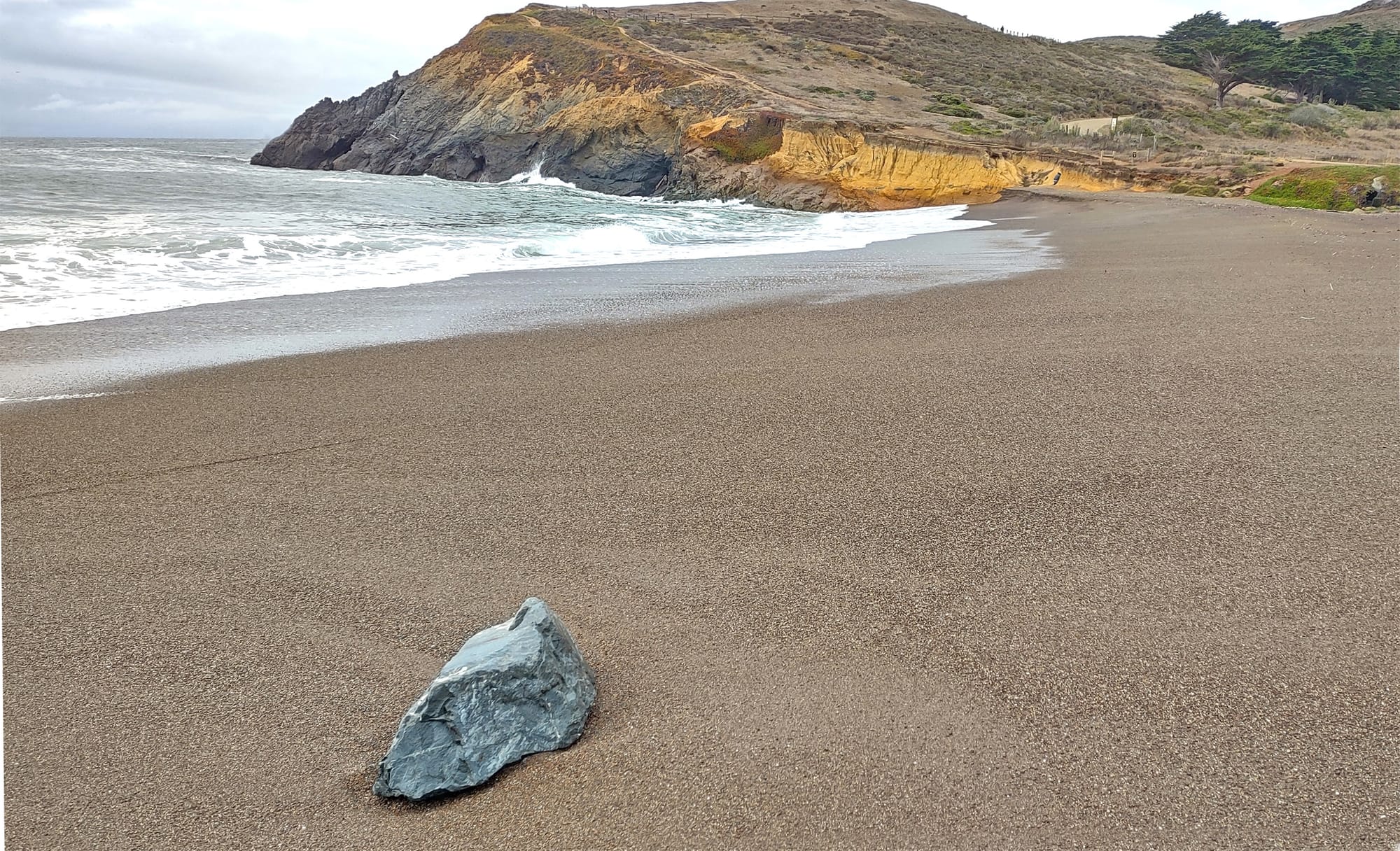
That’s what the world’s current moment feels like to me. BTW, for all the words I know how to spell, that opener up there has more spelling variations than Jim Carey has facial expressions. Just sayin’.
Things are a mess no matter which side you’re on or where you are, and like the spelling options of this month’s opening phrase, there are a bunch of sides and, maybe you’ve also discovered, as I have, people you know that have surprised you because you’ve found out they are on the other side of your side.
I’ve just taken a few moments to consider what kind of humorous ‘aside’ sentence I could construct, but I’ve de-sided against it.
I’m going to abstain from sharing thoughts and observations about the current political, civil, and international maelstrom (for now). Oh, I’ve still got ‘em, plenty of ‘em, but even I’m exhausted by the onslaught of it all. I’m going to focus instead on some overlooked or been-waiting Open Tabs links; throw in A Special Photograph (which in this issue could have appeared under The Political Stuff); and reveal my list of How, Most of the Time, I Know What I Know sources.
Onward.
Open Tabs
Ah, yeah...the Sunday comics section, I can't wait to... Hey, where the hell's the comics section?!
What science knows, wants to know, and what we should understand about autism.
Animal Open Tab 1: Apparently, the stink of fear is all over us. Just ask a horse.
Oh, that's right, for every action there is an equivalent reaction. Climate change ain't the only thing on the rise.
Animal Open Tab 2: Feeling better? Give thanks to a genius chimp.
Animal Open Tab 3: If only kids (and many adults) would listen, they might turn out to be as smart as this pooch.
Well I'll be damned – a climate victory!
"Do you know how to get from A to B?" No, but if you hum a few bars...
How, most of the time, I know what I know
Let’s start off this first article of 2026 with my sources.
I went through and pulled together the majority of sources from which I either receive an email or that I check on a regular basis. It’s fairly comprehensive but leaves out some of the personal-leaning sites, like Field Notes, which might be only of interest to someone like me who carries some kind of notebook every day, and has since their teens.
I don’t feel like I’m revealing some secrets here. A good portion of my life is spent looking for information, for various reasons, and I know more than a few of you will appreciate or benefit from going directly to a source of information you care about.
And I can’t stress enough how empowering knowledge is, or how everyone in this country should be reading the Substack YLE, Your Local Epidemiologist.
And, mentioning Substack… For those still unaware, Substack is the not-quite-new-anymore “new media app that connects you with the creators, ideas, and communities you care about most... discover world-class video, podcasts, and writing from a diverse set of creators who cover politics, pop culture, food, philosophy, tech, travel, and so much more.” Upside, unlike a few other similar online offerings, Substack has attracted many professionals and creatives who put up content worthy of subscribers/followers time; Downside, it’s still growing and there is a universe of Substacks to sort through.
My own presence is slowly expanding, and I’ll be doing more there featuring content related to two of my books, Move To Fire and The Way to Begin (more news about those to come).
A note about the phrase legacy media. It's the term of the moment referring to broadcast and cable news organizations which have been around awhile. The term currently comes weighted with negativity, having been stamped upon traditional (staid or old) news providers, more on the broadcast side than print, but print also continues to take a beating. I think that's bullshit. Big, historic news and journalism orgs have come under the increasing scrutiny of the current, um, negative attitude towards 'the news' in general, but as I have stated to many for years and years, the journalists who put stories together do it for the sake of the story, and few, barely any, go into the profession to stir up one side or the other. The publishing side of news – the financial and C-level overseers – has always been at odds with the reporter-level beat. Many even just barely aware news consumers know how much animosity there is between journalist orgs and parties with a political slant who collectively believe that 'the news' is no longer trustworthy. Again, I say...bullshit. My point of all these words relative to my information sources is that I still consume TV news, as I always have, and admit that CNN leaning to the left exists, but push back at anyone equating its presentation of 'news' with that of the hard, hard right lean of Fox. Fox is not news, never has been, and doesn't position itself as being an independent, nonpartisan news source. It simply doesn't.
So here's the list. It includes my own descriptions of a site and the organization’s or site’s description, and some links are self-explanatory. Every listing has an associated link. Go crazy.
AAAS - Science Adviser — weekly emails on science stories via the American Association for the Advancement of Science
BioGraphic — nature and life forms based news and stories
BookBub — short term deals on books
Climate Science Legal Defense Fund – "The Climate Science Legal Defense Fund (CSLDF) protects the scientific endeavor by putting its legal expertise to work for scientists who are threatened or silenced due to their findings or fields of study. Our work preserves and expands scientists’ rights and strengthens the legal protections that promote scientific integrity"
Contrary Research — well written, deep investment-oriented research and reportage about emerging technology companies
Frank Bruni, NY Times writer — his weekly newsletter highlights great sentences and opinion writing
Freedom of the Press Foundation
futurity.Org — findings and news in science, living, and health
IEEE Journal — Institute of Electronics and Electrical Engineers
The Guardian — “agenda-setting journalism underpinned by an independent ownership structure that is different from other global news organisations. It guarantees our journalism and our editor stay independent from any outside influence, whether financial, political or commercial.”
Innovative Genomics Institute newsletter — “The Innovative Genomics Institute is a joint effort between three of California’s leading scientific research institutions, UC Berkeley, UC San Francisco, and UC Davis, with affiliates at UCLA, Lawrence Berkeley National Laboratory, Lawrence Livermore National Laboratory, Gladstone Institutes, and other institutions. In addition to our scientific efforts, the IGI is committed to advancing public understanding of genome engineering, providing resources for the broader community, and guiding the ethical use of these technologies.”
Journal of the American Medical Association
Knowable Magazine — “a nonprofit, mission-driven publication that seeks to make scientific knowledge accessible to all.”
Literary Hub – "daily source for all the news, ideas and richness of contemporary literary life...with the help of its editorial partners, Lit Hub is a site readers can rely on for smart, engaged, entertaining writing about all things books."
MacMost — Mac-related tips, instruction, and insights
MedPage – a newsletter of news and developments in medical, health, medical research, and health policy news
Mongabay — “an independent media organization reporting on nature and planetary challenges with a global network of local journalists”; stellar reporting on issues from around the world
NASA JPL (Jet Propulsion Laboratory)
Neiman Storyboard — stories and features on the practice of writing nonfiction and journalism
New England Journal of Medicine
New Yorker Science & Technology
New York Times (main, Science Times, and Canada Letter)
NRE, National Registry of Exonerations — “The Registry is a living archive of injustice. We collect, analyze, and publish comprehensive information on all known exonerations of criminal defendants in the United States. We study the frequency and distribution of exonerations, and the causes, costs, and consequences of wrongful convictions and make our data, research, and stories broadly accessible, to be a resource for those who want to improve the criminal legal system and make it more accountable.”
Nuffield Council on Bioethics — “a leading independent policy and research centre that identifies, analyses and advises on ethical issues in biomedicine and health to benefit people and society.”
PolitiFact — objective examinations and fact checking of current political news
Poynter — The Poynter Institute is a global nonprofit that strengthens democracy by improving the relevance, ethical practice and value of journalism. Through teaching, publishing, convening, fact-checking and media literacy, Poynter creates a crossroads where communities come together to use journalism to confront society’s complex problems.
Publishers Weekly — the bible of news about and reporting on the book publishing industry and book reviews
Recommendo — six ‘cool’ items recommended in an extremely short email every week
San Francisco Standard — “the Bay Area’s fastest growing source for news and information.”
The Open Notebook Science Writing News Roundup – "The leading online source of training and educational materials for journalists who cover science. Our ultimate goal is to enable communities to navigate the complexities of how science affects our everyday lives. We focus on strengthening journalistic coverage of science, environment, health, and technology."
Sequencer — “stories about science. a venue for readers who care about pressing scientific questions and appreciate the weird, exciting, rage-inducing, spine-tingling, mind-bending, or even hilarious phenomena around us; a platform for perennially curious journalists who don’t take themselves too seriously. It’s an invitation to discover alongside us.”
STAT — “a prominent health, medicine, and life science news organization that delivers daily newsletters (like Morning Rounds, The Readout for biotech) and in-depth reporting via its website, focusing on breakthroughs, industry trends, policy, and health tech for professionals and the public”
The Scholar Connection (newsletter of The American Scholar magazine) — “venerable but lively quarterly magazine of public affairs, literature, science, history, and culture published by the Phi Beta Kappa Society since 1932; has won five National Magazine Awards, nominated for awards sixteen times. Many essays and articles have been selected for the yearly Best American anthologies.
The Examination — “an independent nonprofit newsroom that investigates preventable health threats and empowers people in harm's way.”
The Trace — award-winning news organization dedicated to covering firearms-related news, events, and stories
Time and Date — what’s happening and when in observable celestial events
Your Local Epidemiologist (everyone should follow this, it's free; highly recommended) — a Substack “to break down complex public health science into relatable, evidence-based insights so YOU can make informed decisions.”
A Quick Not That, This!
You’re at an intersection waiting for the light to change.
It changes, you have the green light.
But you’re behind a vehicle — car, truck, new, old, every kind — that doesn’t move for a few seconds. A few more seconds. A few more…
BECAUSE THE RUDE SELF-CENTERED BASTARD IN FRONT OF YOU HASN’T FINISHED TEXTING / READING A TEXT / SENDING OR RECEIVING AN EMAIL.
Sorry, was I shouting? Drivers do still look at their phones while driving, but that doesn’t seem near as prevalent as does the waiting for drivers taking their time at an intersection to finish whatever they’re doing with their phone. I admit I have done this, but I’ll also state I remain aware while I’m reading that the light’s gonna change, and I’m done by the time it does.
Sounds like a grumpy old guy complaining, I know. And I am, because when you get more than a couple of drivers doing it at the same intersection it’s, it’s…maddening.
Geezus it’s pretty simple: Still reading as the light changes? Not that, this: for the love of gawd, put down the phone and get going.
A Special Photograph
For the Committee’s Consideration
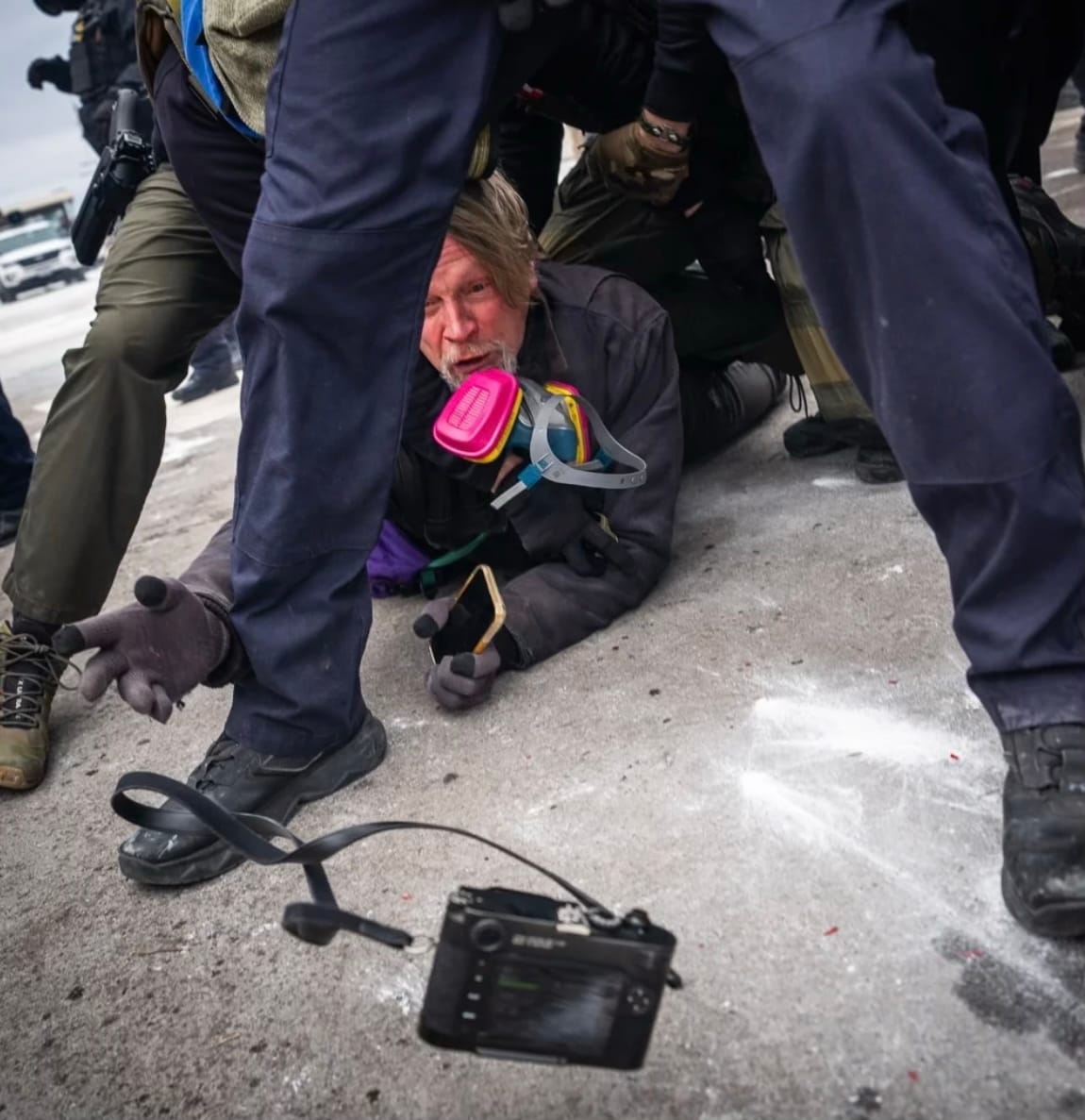
I think it’s worthy of a Pulitzer. There is an entire year ahead, and there will undoubtedly be many images that rise to a level worthy of consideration, but as of right now, with the multiple layers captured in the image at the end of this piece, this one is special.
I love photographers and videographers. I admire conflict photographers and videographers, who become so immersed in and addicted to their craft they get the images even when that means they endanger themselves. Worldwide, it's a dangerous job.
And I empathize with their awareness that while the images they capture tell an important story, it’s their tools that must be protected even at the cost of personal harm.
I grew up informed by newspapers and television. As an early, voracious reader, one reason my couple of months with a paper route* was only a couple of months was my regular tardiness getting the morning papers delivered. Aside from my inherent, lifelong distaste for early morning, my habit of reading the morning paper before getting my butt out there to throw it on people’s front steps and porches was the primary act that brought down the curtain on my short-lived newspaper route. This habit caused great consternation especially on Sundays, and didn’t even really stop after my dad discovered me reading the hefty Sunday edition at the bottom of the stairs long after I should've been slinging it around the neighborhood.
(* A 'paper route,' for you younger readers, is what many boys (mostly boys) undertook in the 20th century to make some money before being old enough to have a burger-flipping kind of job. A bundled stack of newspapers would be dropped off at the home, to be folded and/or rolled and ruberbanded, placed in a large sack, said sack then secured to a bicycle's handlebars, placed in a wagon (rarely), draped over one shoulder (to walk and deliver), or, in winter, pulled on a sled, and then deliver the papers to block after block of subscribers' homes. Weather conditions and slacker attitudes sometimes necessitated a parent driving the slacker through his rounds. Once a week the delivery kid would walk to each house and collect the subscribers' money, almost always cash, with tips, and then deliver that money to the newspaper's local delivery office. No shock to those who know me that I would rather read a newspaper in the morning – which I did no matter what – than actually get up early to deliver them.)
Feels to me that my news and reading things have a basis of equal nature and nurture.
I was also fascinated by news film. It would be years before videotape became the embedded platform for news images; the shoot, transport to a film developing lab, film print checking, transport to the studio, setup, transfer, and presentation of the final film on the live news show was often a chaotic motorcycle courier race that rivaled the Cannonball Run. Now, news images are created, streamed, and broadcast at the speed of light, in technological instants.
Which is all part of why the story about photojournalist John Abernathy and what he did as he was ICE’d, and then what Pierre Lavie did to save the moment, is remarkable.
I have seen documentaries and footage captured by journalists wherein the journalists became part of the story because they were injured or killed. I do not have professional news gathering experience, but I have decades of professional work in video and film, and therefore an enhanced appreciation of what I see.
Rather than explain what’s happening in the photo at the end of this, I’m going to point you to the story about it.
Photography is visually unique, because unlike video or film wherein you can stop on a single frame and see what happened in a moment, the photographer’s sole purpose, as is the camera’s, is to capture a moment. It’s what makes photography so evocative, the only opportunity to see a moment that’s shorter than a thought, grabbed when it happened, no matter the situation or environment, to have and study it forever, any time we wish.
But the captured moment can only be shared with the world if it makes it out of the camera, as could happen if the camera was lost, stolen, or destroyed, something that was not going to happen on Abernathy’s and Lavie’s watch. So take a look at the photo, then check out the full story.
Helluva job, guys, helluva job.
A Different Photograph
Not worthy of a Pulitzer, but offering a bit of visual calm during these calamitous times.
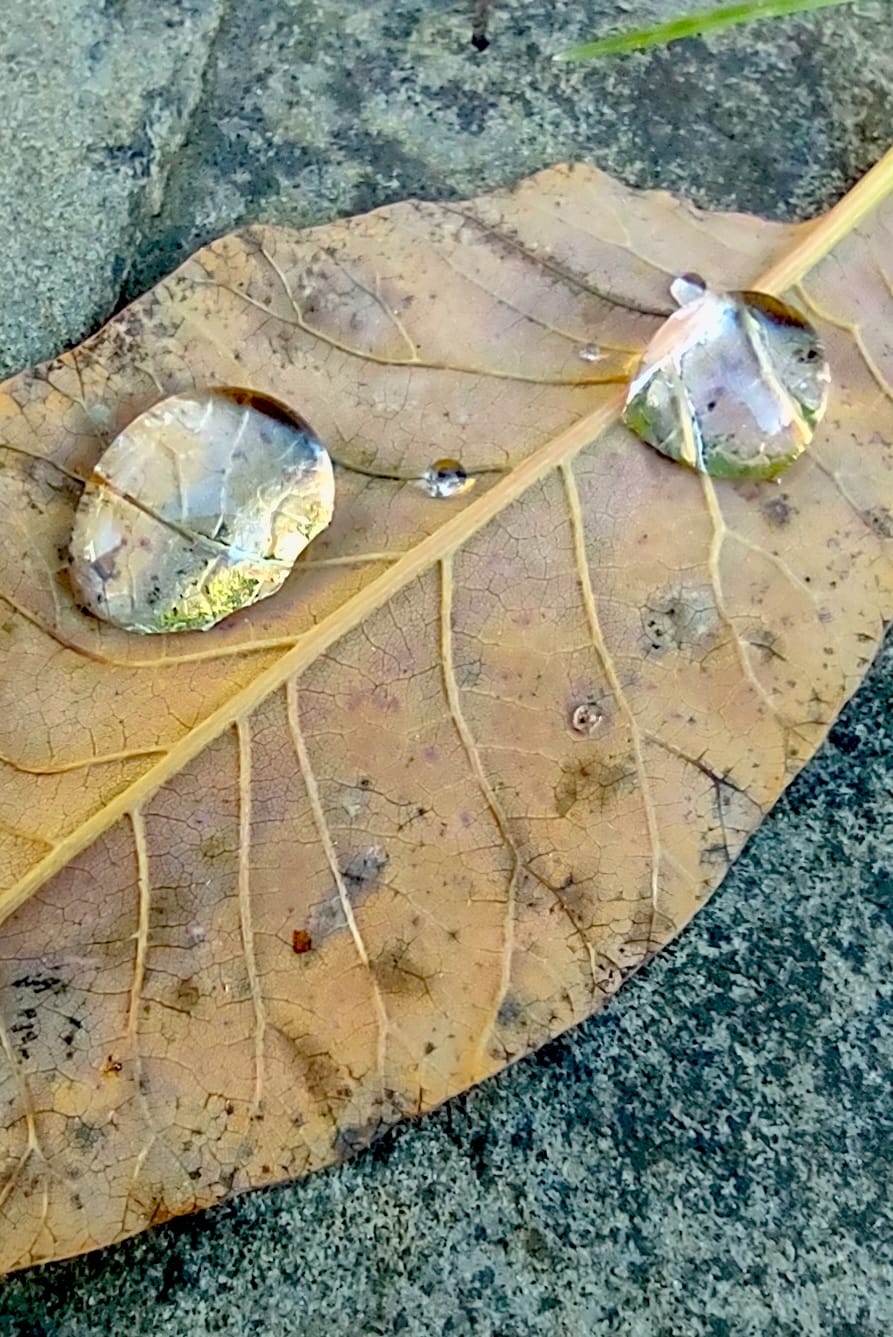
May we all find some peace, somewhere, somehow, stand firm against the waves of injustice, and find our paths to meaningful recognition of our responsibilities to each other and this planet.
It's a big ask, but if we can't ask ourselves to rise to the occasion, how can we expect it of others.
Be safe and well. My gratitude for your time is boundless. Tell your friends about Story and Pictures. See you again soon.
MWH