The usual, unusual, and a special thing
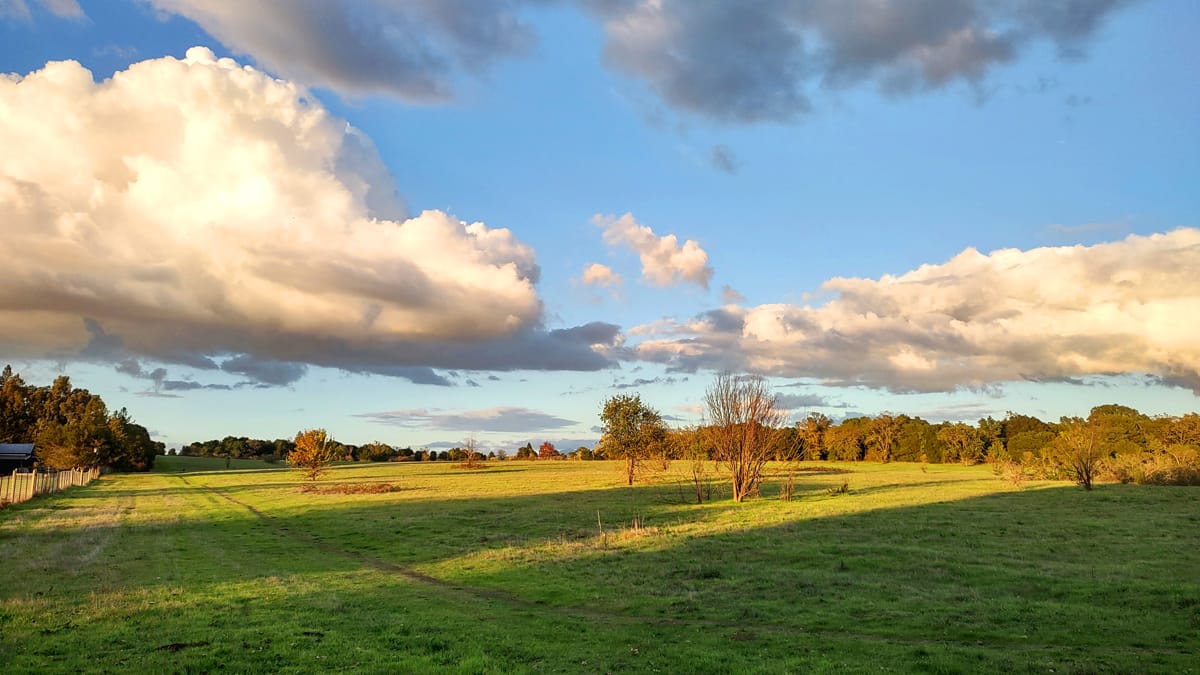
Here it is, that holiday train that barreled into our November lives and won’t stop until January.
And the weather? We’re complaining here in Northern California because it’s foggy until the afternoon and doesn’t get any warmer than the mid-fifties. There are some days that hit the sixties. And we need a little rain.
That’s winter here, which we complain about a little, sometimes, but we all know (especially us originally from out of state) winter here is really just a phrase representing the months at the end of each year and the months beginning the next. Winter everywhere else is batshit crazy horrible. I believe that’s a climate science phrase. Pretty sure. Freezing air from the north rolling all the way to Florida and the east coast, torrential rains and flooding in the South.
Let’s take our minds on a little getaway with a nice variety of Open Tabs, The Political Stuff (so you know where to leap ahead if that’s your thing), Measles Update, a short End of the Year Essay, and a special project I’m starting in 2026.
A reminder, you can always go to the Story and Pictures web page and peruse previous issues, and if you come across links here that don't work or are wonky, do let me know.
Onward.
Open Tabs
Science! Yep, you may still launch your favorite putter into the sky after you rim out, but at least you can now understand why that happened.
Great balls o'fire! The show Stranger Things has nothin' on actual strange magic.
“It’s so hard to hail a flying taxi, y’know?” Here’s why.
Hey, science wins another one. You might not have heard about it…but that’s why I’m here, to let you know about things, like the important finding about what causes lupus: it’s us! (well, it's in us...)
Science corrects itself, because that’s what science does when it finds out a company that manufcures a controversial chemical wrote parts of a science paper about the chemical’s potential effects on people. Gosh, guess that's wrong, huh?
Okay, here’s a little thing about bioethics. Bioethics. You know, trying to manage the questions around stuff we don’t much think about, like some crazy attempt to do meddling with DNA or other molecular ststructures that shouldn’t be done. Or should be done? Getting to the best humanitarian, medical, and ethical decisions is, generally, bioethics.
From the Not Where I Expected that to Go Department: first they killed the vultures. Then, because they killed the vultures, rabies killed the people. Millions of people.
From the American Association for the Advancement of Science:
- When we endanger other species, we endanger ourselves -
A 2008 paper in the journal Ecological Economics found that between 1992 and 2007 the loss of vultures in India led to an estimated increase of about 5.5 million dogs, 38 million additional dog bites and more than 47,000 extra deaths from rabies.
A paper published a year ago in the American Economic Review concluded that in certain districts, “the functional extinction of vultures — efficient scavengers who removed carcasses from the environment — increased human mortality by over 4% because of a large negative shock to sanitation.”
That analysis considered not just rabies, but all human deaths related to the loss of vultures — including those from water contaminated by cattle carcasses. Researchers estimated that India suffered, on average, 104,386 additional deaths, and almost $70 billion in extra costs, each year.
From The Crimes Against Children Department. This would usually be the Political Stuff that always includes the label 'so you can skip ahead,’ but I changed it, because no one should skip over any aspect of this.
We keep hearing about them, those Epstein Files. We read or hear of the disturbing behavior of wealthy, powerful men exploiting, assaulting, and raping underage young women. We await the release, read and hear about names in those Epstein Files. December 12th, previously unreleased photos, from a trove of over 90,000, have been shared showing some of those powerful men in the company of Epstein.
Wait, though. What, exactly are the Epstein Files?
There’s a political and legal news Substack called Meidas+ In its November This Weekend in Politics, Bulletin 256, among a list chockfull of disturbingly interesting insider reports and perspectives, Miami Herald investigative journalist Julie K. Brown, who has covered the Epstein case for many years, compiled a list. It's below. You’re welcome. (The list was compiled before last week’s court decision allowing the release of grand jury hearing documents).
- First, there are the DOJ/FBI federal criminal case files. This is what Congress voted to release this past week.
- A small subset included with the DOJ files are the federal grand jury files. This is the evidence federal prosecutors present to a grand jury in order to get an indictment. It is a very small percentage of the files.
- The Oversight Committee Epstein files: these are the files that Congress obtained from Epstein’s estate by issuing a subpoena. They include Epstein’s calendars, emails and other documents that have been dripping out over they past few months.
- Epstein Civil Case files: Dozens of civil lawsuits were filed against Epstein, Maxwell, Epstein’s estate, Epstein’s banks and the FBI, mostly by victims. As these cases are litigated, a lot of discovery was produced implicating various people and institutions in Epstein’s crimes.
- Two of the civil cases, one filed against Maxwell by victim Virginia Giuffre, and the other filed against the FBI, produced an extraordinary amount of evidence we have already seen: plane logs, message pads, emails, etc. The Miami Herald (Brown v. Maxwell) has been responsible for the bulk of the unsealing in the Maxwell/Giuffre case, which is still ongoing. Several names in this case remain sealed, and we don’t know why. (They are not victims’ names, but John and Jane Doe names.)
- Despite the release and unsealing of portions of these civil case files, many of the documents remain sealed or redacted. Media organizations, such as the Miami Herald, NNT, WSJ and some TV networks, have filed requests to unseal more documents. This is a painstaking process and it is SLOW. These are the documents that require a judge’s ruling or a panel of judges to rule upon.
- Treasury Dept/IRS Epstein files: Sen. Ron Wyden has been in the forefront of seeking access to Epstein’s financial records. However, he has not received support from Republicans on this front. These files are important because they show how Epstein made his money.
- CIA files (if they exist): There has long been speculation that Epstein worked in intelligence. Release of these files, if they exist, would show to what extent he was involved in intelligence which would perhaps also explain why he managed to get away with his crimes for so long.
- FAA records: Epstein had two jets and flew around the world. He was, after 2008, a convicted sex offender. Did anyone ever check to see whether he was bringing in women and girls from other countries? Not all his plane logs have been made public, and while the FAA does not hold Epstein’s plane logs they do have records on where he flew. DHS should also have records on his passengers when he arrived from overseas. (Last I asked for them, they were fully redacted.)
- Last but not least: Remember that not all the claims against Epstein and his associates were filed in court. Many of them were also settled through quiet agreements that may never be known. I know of several.
Measles = potential killer of children and adults. I included that little bit there because it's just so damn dangerous. And so, so avoidable... can you say vaccine?
From the World Health Organization: "Measles is one of the world’s most contagious diseases, spread by contact with infected nasal or throat secretions (coughing or sneezing) or breathing the air that was breathed by someone with measles. The virus remains active and contagious in the air or on infected surfaces for up to two hours."
That last part? Someone infected can hang in a room, leave, and if you walk in within a couple of hours after that person left, you can be exposed to the virus. Infected kids can die. If a kid survives, he or she can still die a few years later from complications that linger after surviving the initial exposure.
CNN South Carolina measles outbreak:
Josh Michaud, associate director for global and public health policy at KFF, a health information nonprofit that includes KFF Health News. “The logic is indisputable that we’re likely to see more outbreaks.”
Spartanburg’s vaccination rate is among the lowest of South Carolina’s 46 counties. And that was true “even before covid,” said Chris Lombardozzi, a senior vice president with the Spartanburg Regional Healthcare System.
Nearly 6,000 children in Spartanburg County schools last year — 10% of the total enrollment — either received an exemption allowing them to forgo required vaccinations or did not meet vaccine requirements, according to data published by the state.
Lombardozzi said the county’s low vaccination rate is tied to misinformation not only published on social media but also spread by “a variety of nonmedical leaders over the years.”
Edward Simmer, interim director of the Department of Public Health, would not speak to KFF Health News about the measles outbreak. During a legislative hearing in April, Republican state lawmakers voted against his permanent confirmation because of his past support for covid vaccines and masking. One lawmaker specifically criticized the agency during that hearing for the Shot and a Chaser campaign.
Public health officials in other states also have been blocked from new roles because of their covid response. In Missouri, where MMR vaccine rates have declined among kindergartners since 2020 and measles cases have been reported this year, Republican lawmakers rejected a public health director in 2022 after vaccine opponents protested his appointment.
I’m a raptor guy, so this last Open Tab is simply one of the coolest hawk-related things ever: Like your cherries? Thank a falcon. Yeah, really.
An Essay
The last essay of 2025 — We’re the species that does amazing things on a planet ~140,000,000 miles away away from us (farther and closer, depending on the season), while down here…
How would you finish that sentence? Cynically, optimistically, with excitement, trepidation? Apparently, that’s life right now, that manic swing from happy to sad kind of existence where one day we say “Really?” because of something astounding, and the next day, “Really?” because of something astoundingly reprehensible.
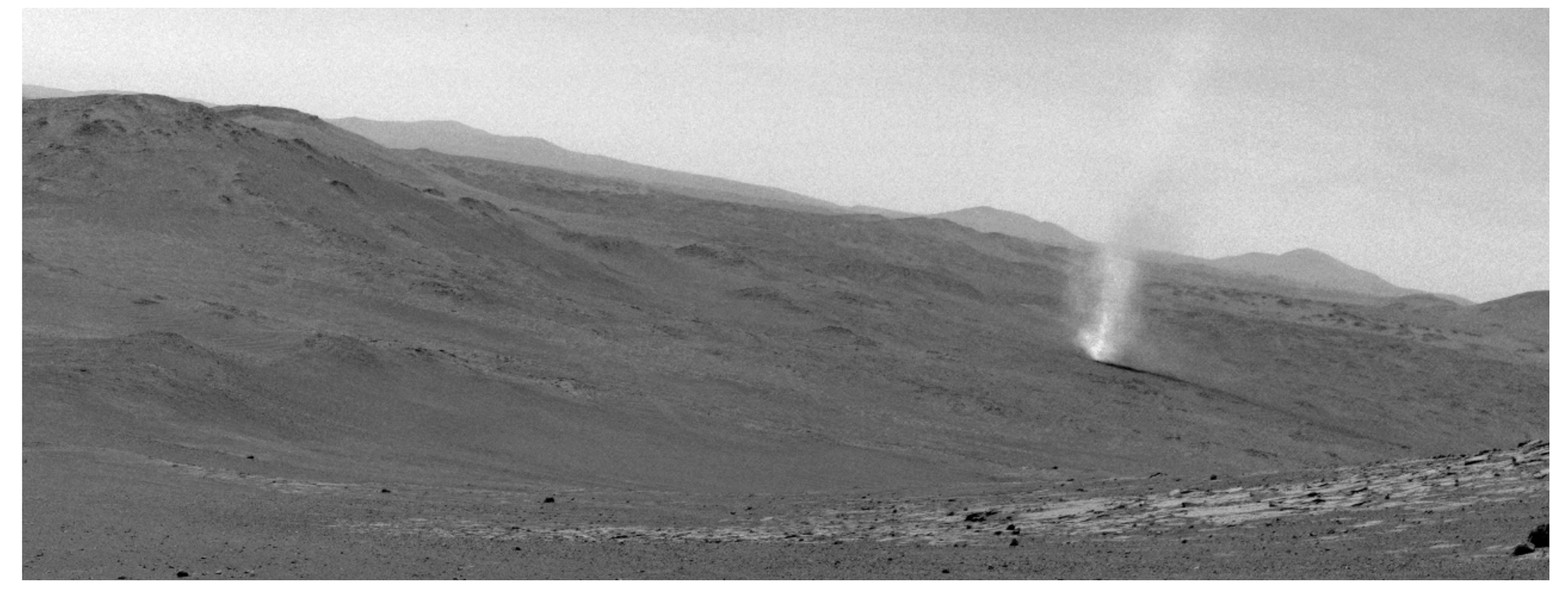
Here's a snippet of that 'something astounding,' video showing a tornado...on Mars.
I'm not going to include some snippet of anything re 'astoundingly reprehensible,' because we see enough of it everyday.
It’s the holidays, so we’re supposed to feel more charitable and appreciative than usual. That’s what it’s all about, right? Really dig you and here’s a scarf, here’s a drill, here’s a PlayStation.
I strive everyday to appreciate our potential to do the right thing for the right reason. I just as often reach the end of the day realizing how much time I spent being grumpy and unappreciative. It is like hell in a basket much of the time these days, but this gig — Story and Pictures — also exposes me to news and stories about people doing amazing, unheralded, hard, critical work to make lives everywhere better. Things we might live our entire lives never knowing about, yet those things are keeping humans alive, well, or thriving.
For all the dopiness in our world right now, from the just dopey to the dangerous kind of dopey, I believe that with a little assistance from fate and chance, we’ll survive this time of the revitalized idolatry of the Obese Golden Calf with Orange Hair, and that while life will remain in flux and danger (because we’ve put our species in a very serious predicament) we’ll be scarred, but wiser and still around to do some amazing things right here on this third rock from the sun.
An addendum — This very morning as I’m on the verge of sending this issue to y’all, I get wind of this, something in between here and there re the millions of miles away vs. only a couple’a thousand feet above our heads. And capturing the resulting image is something that's never been done before.
A Special Project in 2026
The Twenty-Year Opus
You’re all fairly hip and may know of Substack already, but no stress if you’re not aware of it; it’s still growing, quickly, with a sizable community of creators. And as for what it does, I present its own description: “Substack is a new media app that connects you with the creators, ideas, and communities you care about most. Here, you can discover world-class video, podcasts, and writing from a diverse set of creators who cover politics, pop culture, food, philosophy, tech, travel, and so much more.”
Yeah, that’s a good description.
I’ve had a quiet-ish presence there for (a year-ish) under the Story and Pictures banner. I put up a few essays and occasionally share content that first appeared here.
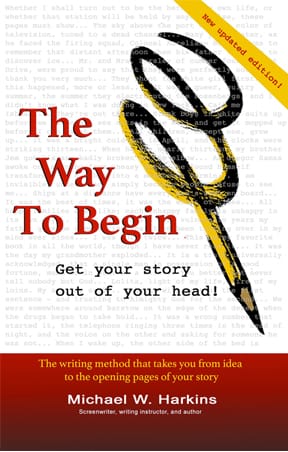
In 2026 I’ll be expanding with two new Substacks: one to parallel and expand upon my latest book The Way to Begin, 2nd Edition, a method to assist new and ready to be new writers with those sometimes obstinate opening pages of a first book or story. Essentially, as the book's subtitle says, how to get that story out of your head.
The second special project is a 2026 annotated edition of my book Move To Fire. The skinny follows.
The Opening Note of a Twenty-Year Opus
Twenty years ago Richard Ruggieri, then a plaintiffs’ attorney after leaving a successful career with a large insurance defense firm, contacted me about designing courtroom exhibits for a trial’s closing argument. Our wives knew each other first (via the legal profession), we’d all had a couple of dinners together, and he knew I was a writer and creative designer. He had previously hired me to design a website for a class action he’d filed.
We met at his office. He explained the exhibits he needed and described the case.
I had a thought that I remember word for word: who wouldn’t want to know about this story?
He represented Brandon Maxfield, seventeen-years-old and paralyzed from the neck down after being accidentally shot ten years before by a handgun commonly referred to by law enforcement and the media as junk guns and Saturday night specials. Bryco Arms, the manufacturer, had a history of producing low quality, dangerously unreliable handguns, with some models selling — new, in pawn stores — for fifty dollars. The company and its owner, Bruce Lee Jennings, had been sued multiple times for injuries and deaths caused to varying degrees by Bryco or Jennings’ guns. Those lawsuits had failed or, in less than a handful, confidentially settled.
In 2002, Time magazine revealed a previously unpublished Bureau of Alcohol, Tobacco and Firearms report of “top 10 guns used in crimes in the U.S. in 2000.” Two Bryco models made the list, including the model involved in Brandon Maxfield’s accidental shooting. Jennings — Bryco’s owner — had ties to several of the list’s other gunmakers.
Ruggieri had filed a product liability design defect lawsuit for Brandon against the gun company. After more than two years of research, investigation, depositions, and a four-month trial, Ruggieri felt the case was solid legally but, as I would find out later, the stress of having self-financed the kind of lawsuit that had never prevailed in court was ever present. And he had taken on Brandon’s case even though one of the Bay Area’s largest plaintiffs firms (the plaintiff is the person or entity that sues the defendant) had taken the case mere days after the accident but dropped it months later.
Ruggieri hadn’t taken on any other client since he’d agreed to represent the teen. Every mile by car or plane, every expert, gun test, research, deposition, expert witness, every case-related expense came out of his pockets, and what came out of his pockets was there via a second mortgage.
After our meeting I told Ruggieri I would like to follow the trial, and shortly thereafter asked to follow his, Brandon’s and his family’s story, which is how I came to be in an Oakland courtroom attending Ruggieri’s and the defendants’ closing arguments.
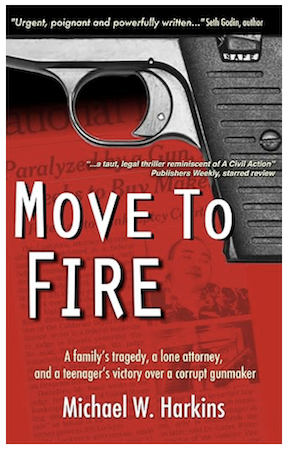
It took a decade to research and write Move to Fire — A family’s tragedy, a lone attorney, and a teenager’s victory over a corrupt gunmaker, released in November of 2015.
Oh, and that initial thought, about who wouldn’t be interested in the story? I was right, but it was complicated.
At one critical point, events attracted so much attention that every major national news organization, publications, and news outlets in eight other countries covered them. Shortly after that intense rise in public awareness the events faded from news cycles quickly. But the story, as eventually told in the book, continued for over six more years.
After the first trial’s conclusion (note ‘first’) I queried several book publishers and agents about the story, and received an ‘okay I’ll look at it’ from the first editor I contacted. I sent a proposal shortly after, kept working, and eventually sent a follow-up email. That editor had left, and the proposal was not picked up by another. Other publishers and agents courteously responded with “sounds like a magazine article.” Evaluated now with an objective look back, the responses were understandable, because none of us inside the story, let alone an outside observer, could have foreseen everything to come. It was simply too early.
I continued writing, design, and other media projects as a one-person creative services shop, as I had occasionally during and since leaving my roadie and video production career. I was the creative director and cover story writer for a Northern California business magazine when Ruggieri contacted me about the trial exhibits. The magazine was growing in readership and significance, I enjoyed creative leeway, and had the confidence of the publisher. But time, research, logistics, and required travel (and writing), began to suck up days and nights. I left the magazine to devote my days to the story, did freelance projects and took part time jobs, and wrote, read, interviewed, wrote…
Ten years to research and write it. Now, ten years after its release and twenty years after it all began, this is the announcement that I’m creating a 10th year, special Substack iteration of the book that changed my life.
Actually, ‘altered’ my life is more accurate.
Publishers Weekly gave the book a starred review. Best selling author Seth Godin provided a poignant cover blurb. Award winning graphic novelist Brian Fies’ review described it as “a well-built narrative that pulled me through page by page.” A New York agent with a focus on nonfiction agreed to rep it and submitted it to two dozen publishers. They universally praised it, as each passed on it: “…we just don’t know how we would position it…” The agent shared every response he’d received, and he was clearly disappointed, describing the marketing / promo concerns as the kind of reluctance publishers had shown to some of the earliest climate change-related titles (it took Al Gore’s An Inconvenient Truth to eventually break through that wall).
So, there is all of that, but there is also this: Move to Fire is currently optioned for an independent feature film, the extent to which I can describe that specific project’s current status. And I am so grateful.
Links in the annotated edition will point to research and source material directly relevant to specific book content: notes, transcript excerpts, trial exhibits, photos, audio interviews, and video, including unseen documentary footage related to and on the day of the Bryco / Jennings bankruptcy auction. I’ll also occasionally post about the processes of writing the book, my decisions, the how and why of writing it.
Current Move to Fire print and ebook versions will remain available through brick and mortar bookstores and online retailers, and all versions will eventually be updated in 2026 with a new epilogue, not just because time marches on and things change, but also because the scenario of a defective gun, an accidental discharge, a family tragedy, and a bankruptcy, happened again years after Ruggieri’s and Brandon’s tale, with many of the same gun manufacturing individuals at the core of it all. A tragedy that didn’t have to happen, and shouldn’t have.
More updates to come.
Be safe, well, and happy. Thank you for being here (tell your friends about us), I am always aware of how valuable your time is and appreciate your willingness to allow my words to share your head space for a short while.
MWH