Ch-ch-ch-channnges...

If you’re in or near one of the earth’s sweat zones right now, or flood zones, storms-from-hell zones, I feel for ya’. Wait, that's all of us now, isn't it? Oppressive heat, floods, tornados… these are not same as it ever was times. These are different. And things have been headed toward this serious state of ‘different’ for quite awhile.
Regardless of the dismissive eye-role of those who share unshakable beliefs that, essentially, humanity and technology have little to no negative atmospheric or climate-related impacts and there is no consensus or research that show humanity is responsible for climate change. It goes something like this: “I believe it’s just weather, sometimes good sometimes bad, and all the climate change talk is hot air. And a way to make us pay more for things, regulate our lives, blahblahblah…”
Ahhhhh, ‘belief.’
Belief will not stop, alter, or affect in any way what's happening, and what's happening is what the current aggregate result of every longterm, validly researched scientific, atmospheric and climatology measurement study indicates about our future: the earth is on an unprecedented warming path; with increasing occurrences of extreme heat events; glaciers melting faster than projected; increasing numbers of and larger typhoons, hurricanes, tornados, and flood inducing storms.
Damn, the words generate either an oh man, give it up already and fixate on something else, ya boob... or ...keep it to yourself, ya’ end of the world alarmist. What, like, you gonna fix it?
Am I going to fix it? Fair question. I share Howard Zinn’s perspective: Small acts, when multiplied by millions of people, can transform the world.
The small acts, those are everyday. Any opportunity to make a bigger contribution, most of us do what we can. At a minimum, accepting science is the place to start.
That’s my belief.
There is an urgency to things though, so… (see paragraph four above)
Onward
Here come a digital container full of Open Tabs, a semi-editorial about editorializing current events, a note about some upcoming Stories from Everywhere essays; and a diversion from the usual last words, called The Close.
Open Tabs
"We're so pleased you've stopped by our little planet, if you'll just step, um, float, uhh, teleport, well, however you'd like to come this way we'll begin the proceedings. We've been waiting for your arrival for some time. I must say your skin, or whatever they call it on your planet, is a lovely shade of green."
And sticking with our galactic opening – Looking for a new gig? You could apply to be an astronaut.
Lightning? Well my boy, sometimes it's bolts thrown by Thor, or maybe his dad, Odin? Okay, it's really when static electricity builds up and, well, hell. Lightning is...complicated.
"Another cuppa Joe, Joe? Your liver will thank ya'."
Hey, look, I've been dating this woman online, here's her pict, she's the most beautiful...is that an extra ear? Um, I can see six fingers on your hand. You are real, aren't you?
Hi, I'd like a shiny, tasty, blue M&M please. WTF are you talking about, just give me a blue M&M! What the hell is so hard about giving me a blue M&M?? Oh...
Occasionally despite all the range of humorous introductions that could be used to intro an Open Tab, the wisdom that comes from age manages to tamp down the temptation to write something that could go horribly wrong. Hence, this simple introduction: girls, hit the iron (weights, ya' misogynists) to smack down heart disease.
Like the Open Tab above, this piece also has the word iron as part of the story, but it's married to another word. If I were to just place the two words here, many readers would think it described some sort of weighted fitness vest, or maybe the name of a professional wrestler. It is a thing and a relic of history. While the story is a tad sad, that the darn thing still existed is pretty crazy, and that it kept someone alive who otherwise would have perished is wonderful yet melancholy, and it's a brief lesson in the kind of early technology that kept many kids alive a long time ago: the last American in an iron lung.
At just under thirty minutes this one's a tad long, but it's also the kind of thing that helps us collectively correct history's record, to wit (and if you're of a certain age you'll understand): Patient Zero is a myth.
Finally, from the 'You probably didn't even know this is happening' department, this final Open Tab will be a fine lead-in to the essay that follows: There's a book ban making it's way into federal law, and I ain't f*cking kidding.
A Stories From Everywhere Essay:
Can't you just do a feel good story instead?
It’s often easier to report about or opine upon reportage of bad news vs good news. There are reasons for that. There are people symbolically close to me (I’m keeping it vague to avoid friends or family asking “Was that about me?!?”) who don’t read or watch ‘the news’ because, many say, there’s too much focus on bad and/or troubling news, and daily life is stressful enough without having doom and gloom shoved in our ears or projected directly onto our eyeballs.
That’s fair. The ‘News’ as used here encompasses everything from TV and newspapers (which over the last couple of years have come to be known, somewhat disparagingly, as ‘legacy’ news) to the ever increasing plethora of digital news pushers from what were pioneers Huff Post and Yahoo to the new, online not-legacy news providers Meidas and hundreds of others on Substack. Negative stories — bad, upsetting, troubling, those sorts — populate them all because, in part, the negative stories have a greater emotional impact than the feel good stories, not just on the audience but on the reporter. Writers, including moi, get all righteous and what not because we're finding these stories and getting pissed about them, then we're attempting to let as many people know as we can before whatever that thing is that's bothering us gets worse.
Yep, we're hoping to simultaneously spread a little anger and a little awareness.
Anger simply elicits a more energetic or visceral reaction than love, which (IMHO) evokes more connective, humanitarian reactions. TV newscasts place the feel good stories at the end of their broadcasts to: get some dang feely good stories slotted in somewhere; keep viewers watching who might otherwise bail; and to implant a lingering, positive feeling with viewers whenever they think of or talk about the news show.
To be direct and open with all of you loyal readers (or at least loyal recipients of Story and Pictures’ emails), that’s the reason I attempt to end each issue with something easy on the eye or easy on the brain.
Some Story and Pictures readers simply don’t dig the not-happy pieces that appear here, and I certainly don’t want to be seen as a member of that ragging rag category. It’s my personal and professional nature to present the more interesting content (to me) — science, medicine, animals, music, essays, photos, etc. — than to populate this space with political reporting or screeds (there's a difference, although in this day and age screeds sell. and there's a lot to screed about). There are plenty of people doing that already, and many are doing it very well.
But life is edgy right now, politics has never been more personal, and there are an awful lot of people who don’t realize just how dangerously fragile some things are currently, everywhere. I don’t have any kind of special insights into or moles tunneling around for political stories (ditto the above ‘there are already plenty of people doing that’), but I care about worldly and national things.
I care a lot. And I’ve been thinking about why that is.
I think a half-dozen or so military conflicts and wars during my lifespan are part of it, as is experiencing (either directly or vicariously) the lasting damage from negative actions and noting how recovery from a single damaging incident, which might initially unfold in minutes, often requires intervention and repairs that span generations.
So for me, it seems, it’s experiential — war informs as it occurs, and the metaphorical short time it takes to negatively alter something, a life, a place, a country, requires reclamation x-times longer than it took to screw things up.
As teens, my parents, from Scotland and Ireland, lived in Nazi-targeted Glasgow, a city bombed a dozen times during the war’s early years; my dad had several stories of coming thisclose to being injured or killed, including almost being hit by air defense shrapnel rocketing down from the sky, and of being launched “ass over tea kettle” after a bomb blast outside the building where he lived.
I was born: less than ten years after the end of WWII; only three months after the ‘end’ of the Korean War (for those who don't know, the war between the two Koreas has never technically been over); two years after the initial U.S. involvement in the Vietnam conflict (1955) that lasted until 1975, a period that also includes my three and a half years as an Army paratrooper from ’72 to ’75.
Then come the Gulf War, Afghanistan, and Iraq. And now the current Mid-East mess.
Wars and life during conflict have informed me immensely, not just the battles but the machinations, subterfuge, and straight-out government falsehoods that are part of it. Over the years I have been occasionally queried about my time in the Army, which spanned the end of the Vietnam conflict and the subsequent end of U.S. involvement. A couple of those questioning my service pointed to the 1971 Pentagon Papers’ revelations that exposed the Administration’s domestic propaganda work to give Americans the impression that the U.S. was successfully fighting back a wave of communism across another continent, when in actuality the conflict would become historic because of its figurative and literal quagmire.
So, being old enough to know the ‘truth,’ why had I become a participant in the whole mess? One of those conversations amped up when I talked about my low draft number and how that almost certainly meant I would be drafted, and the reaction was why hadn’t I split to Canada, or sought some other avoidance?
The answer is complex, and without going into a lot of family dynamics and what I was doing and living through at the time, my response is informed by my parents' history: the draft was something your country asked of you, and what you did in response was serve. I’d heard my dad say it, and my mother talk about it, and although they didn’t want me to go they also expected me to do the ‘right’ thing. They still felt that way even though they knew, in a general manner, that the conflict was a geo-political mess and, as they taught me, the body counts of VC killed vs. American soldiers killed were bullshit. As a kid, I could sense their tension. No one would dare say we should get the hell out. But no one wanted to keep sending guys around the globe and have their limbs blown off.
But still, leaving the country or in some other fashion avoiding service time simply wasn’t part of who I was or where I came from.
Ultimately, everything was fine. It turned out to be a laboratory for observing human nature under multiple stressors, and experiencing how one or two mis-steps, a few seconds glance to one side, or at the other end of this spectrum the actor who does something – or doesn't – because he's angry, rejected, repressed, or unstable, how any of those can become a catalyst leading to a surprising degree of damage.
Ya' had to pay attention. Watch the little things.
I can’t point to a specific incident that opened my eyes to the longterm damage and reparations born from the briefest of negative acts, whether purposeful acts or accidental. I had inklings of Love Canal's problem. Bhopal (as close to a purposeful incident as possible and a horrible example of willful neglect for safety), the Exxon Valdez oil spill, Three Mile island, these are significantly etched in my memory. The damage wrought took years to address, generations of lives were altered, and heavy elements from the spill still exist in the sea bottoms and coastal lands.
The smallest miscalculation, a single incident, can result in an epic disaster, the threat of which for decades was nuclear war. Now it's a plethora of possible planet elimination possibles. But real sabotage happens (at/to) foundations. 'Knock the pins out from under them,' as someone like Knute Rockne might've said. Could be actual pins, pillars and such, or metaphorical, remove a small piece at a time, little things, and when the time comes just one more little thing and everything will change, and things get terrible.
The point here is keeping in mind the above 'one more little thing.'I obviously can't speak for anyone else, so I can only editorialize that those of us addicted to the news, or who write/report the news, break the news, we're not trying to find a million ways to bum everyone out.
We're simply doing out best to, well, damn, doing our best to share all sorts of things before we something happens that will have us writing, for you wonderful readers, "told you so."
Changes
This issue took longer than most to assemble, in large part because of Story and Pictures' future. While the overall approach to what I share here and how I share it won't change much, the focus is shifting to more essays and less randomness. I have some long-term subjects I've been working on for awhile, and shaping them into essays worthy of your time takes, well, time. This is simply a heads up that there'll be longer periods between issues.
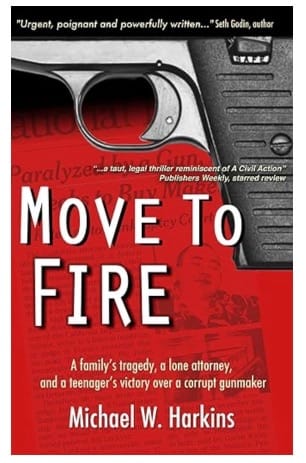
I'm also – finally – about to make my Substack presence a bit less hit and miss by sharing some content between here and there, and prepping a new Substack with content based on my book Move to Fire. It was 22 years ago this week that major news organizations reported upon a paralyzed teen's attempt to buy the assets of a bankrupt gun manufacturer, assets that included over 20,000 guns with the same design defect that had contributed to the accidental shooting that paralyzed him as a seven-year-old.
Nothing earth shaking, just an FYI.
A sad one-year anniversary
A year ago we lost one of the 20th century's greatest, innovative, kindest architects. Louis 'Lou' Naidorf, best known for L.A.'s Capitol Records building, unless you're from Texas, and it would be the Dallas Hyatt and Reunion Tower, or Humble Oil building in Houston, or...well, you get the idea. I remember Lou here.
Okay, let's go to the feel good stuff – good dogs and good humans
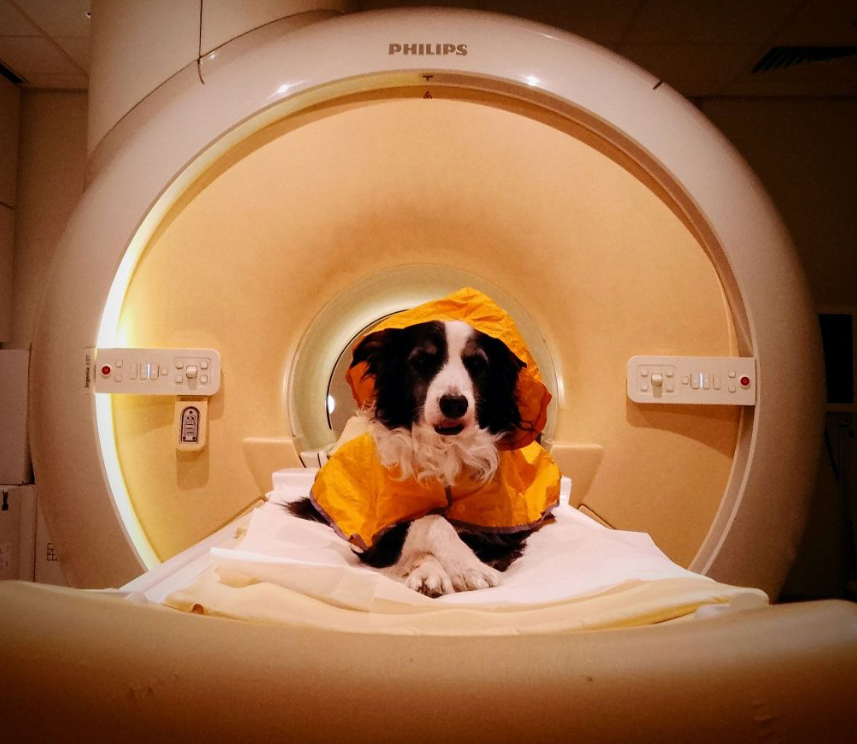
Your dog knows you, and has a good sense of what kind of mood other humans are in, more than we might have realized (but those of us who have known dogs for-frickin-ever knew this already)
How about this for a 'Some Humans are Great Examples of Everything That Can be Good About Us' story
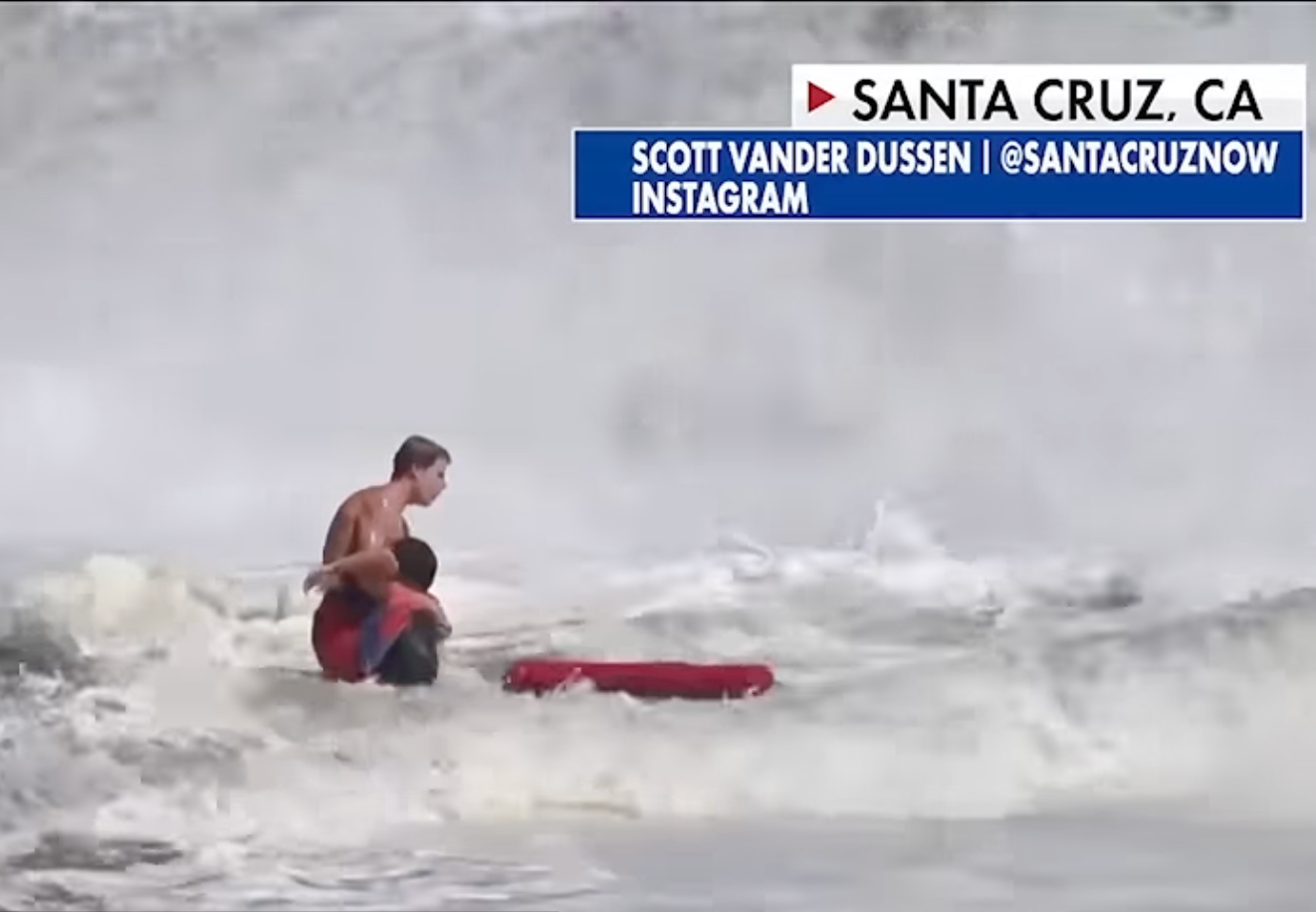
Even those who don't 'follow' the news might have heard about this teen, and if you have heard about or read this story, you may not have seen the full two-minute video, or be aware that the rescue itself was an agonizing five minutes (as I've looked though dozens of sites that carried this news story, it seems that just over two minutes is the video length most news reports used).
Thanks kid, you are a very special human being.
The Close
Thanks for spending a few minutes here. I do, truly, appreciate it. You keep stopping by, I'll keep finding stuff to share. Tell your friends!
Be happy, be well, be safe.
MWH