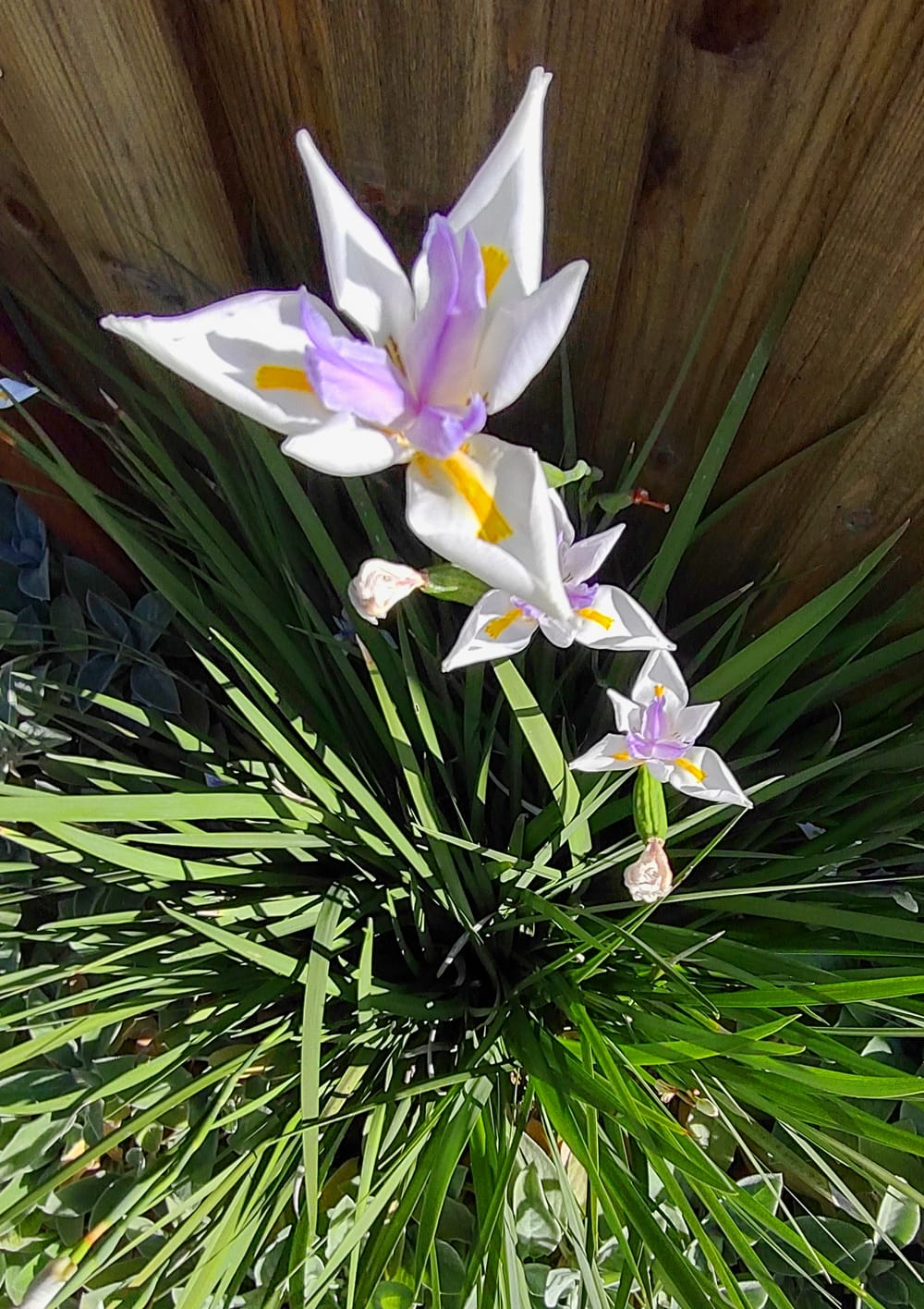
Summer Stew
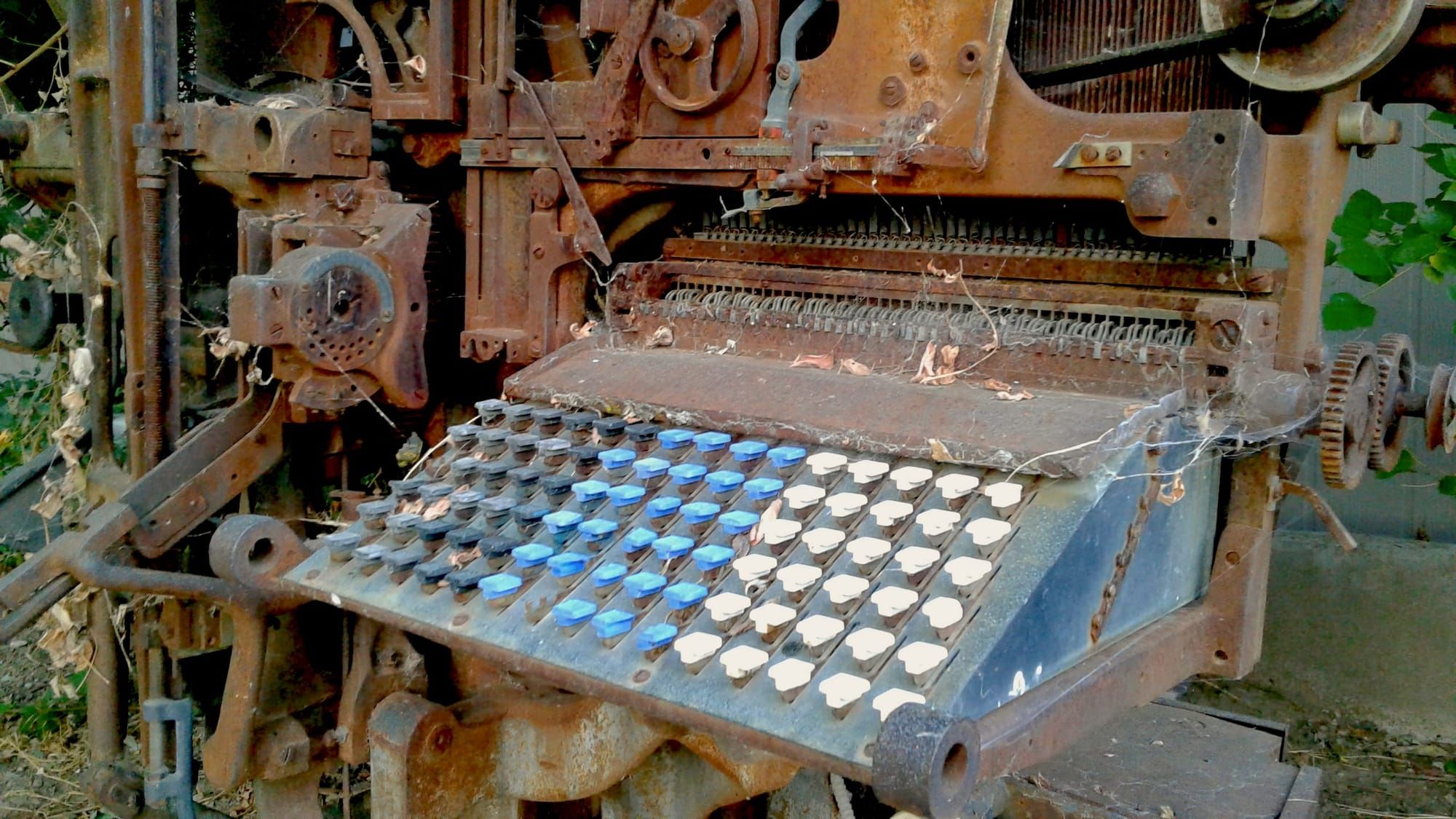
Hope everyone is well during these this-madness-will-eventually-end times.
First, subscriber news. I call you all the founding core of Story and Pictures, many of you have been here since the beginning, and when I sign off each issue with recognition that I appreciate you're time, I mean that sincerely. As of today, all core members have complimentary subscriptions for as along as you want to hang out here. If any of you receive notice that I cancelled your subscription, fear not, because I immediately signed you back up as a comp; if you receive any kind of billing notice on your renewal date, that's a mistake and you should let me know so I can fix it.
Thanks for sticking around.
Onward.
There is the usual and hopefully interesting variety of Open Tabs, including info and links about Ebola, a pathogen that on this continent we don't give a moment's thought about...until it hitches a ride on an international flight or other method of travel. A new, semi-regular feature appears in this issue, Math in Nature, which may be the un-sexiest title I've ever written, but the content is so cool, at least for a science/med/tech/eco nerd such as moi. A Photograph here and there, a Note, and Where I Was When (WIWW) complete this package. This issue's WIWW is a little more general than previous usual because summer equates to concerts, and the oodles of memories from my time on the road could take up a lot of space.
Open Tabs
Dog stories, like this one, do seem to find me. This one confirms my long time suspicion...the dogs are listening.
Cue the eerie ascending pipe organ notes, the Outer Limits' haunting yet melodic Theremin's tone (at 2:15) , bring up the plucked violin notes from the Twilight Zone, because scientists are suddenly disappearing and no one knows why...Wait, what? But, I read that...Oh...Gosh, well it seems that scientists are NOT actually disappearing under mysterious circumstances after all.
You will have to register for a 'free' NY Times account to read this story, but it's one of the few times I'd encourage you to do so. With all of the things we can't seem to deal with currently in this country, there are still remarkable – and I mean truly remarkable – things we can do, like do a heart transplant on an infant
I'm a raptor guy – you know, red tail hawk, falcons, eagles, osprey – but long before I volunteered for over two decades with a raptor migration monitoring organization, I had an interest in the historically mystical ghost raptor, the owl. It's at the heart of several mythologies, with its swiveling head and huge eyes, but what made it most ghost-like was its ability to seemingly appear out of nowhere. That coolest owl trait ain't ghostly at all, though, it's the science of turbulence meets the stealth of owl anatomy that creates an owl's 'you won't hear me comin' ability.
"Remember that day we flooded the bathroom?"
"We flooded a bathroom?"
"Yeah, the one in the basement, with the orange walls."
"We had a basement?"
"We remember things differently, apparently..."
I drafted several versions of an intro for this next Open Tab before I finally settled on using the video poster's own succinct description of it: The world's deadliest company, and you've never heard of it.
It was always a real thing, but not everyone believed it. Now scientists are getting a better handle on the how and why of long Covid.
"What was that?!" Well, can't say for certain, but maybe you should call a plumber instead of the Ghostbusters, because it almost certainly wasn't a ghost.
Not to be juvenile about this, but there are some of us who've known since, oh, that special concert night eons ago, or similar situations, during which a particular kind of fungi made us feel a lot better about things. We were right.
Ebola
Two different links, important information. The pathogen is unlikely to become a problem here, but it's good to have an understanding of it, especially because news about it has been plentiful and understanding what it is provides a better foundation for understanding diseases in general.
Discovered in 1976. Named after a river in Zaire.
Contagious and deadly.
Math in Nature – "Why this is remains a great mystery, one well worth pursuing from both the mathematician’s and physicist’s points of view."
This is the new semi-regular feature Math in Nature, about things that by their very existence display mathematical concepts, including the range of space, time, and dimensions that seem too trippy to be real.
There are unquestionably learned people who posit that the universe 'is' math, or a hologram, or mathematical construct. Many other people who dwell on such things agree that math explains the universe, and/or is the language of the universe. I don't have the intellectual prowess to take part in such conversations, but I sure do appreciate that numbers and mathematically based concepts of our special existence, because 'we' are the only thing in the universe (that we know of) that contemplates itself.
Here's a tidbit from someone who does have that afore mentioned intellectual prowess:
"...Thinking of the universe as a mathematical structure has turned out to be extremely fruitful, both for mathematics and for physics.
What is important though is that not all mathematical structures are equally important, central, or interesting... Once you learn enough mathematics, you find certain recurring themes and deep structures throughout the subject. What fascinates me is that these often also turn out to be central in theoretical physics. [Rather than accept] every mathematical structure as equally important, creating a huge undifferentiated multiverse where we occupy some random anthropically acceptable point... the evidence is that the mathematical structure we inhabit is a very special one, sharing features of the very special structures that mathematicians have found to be at the core of modern mathematics. Why this is remains a great mystery, one well worth pursuing from both the mathematician’s and physicist’s points of view." From the site Not Even Wrong
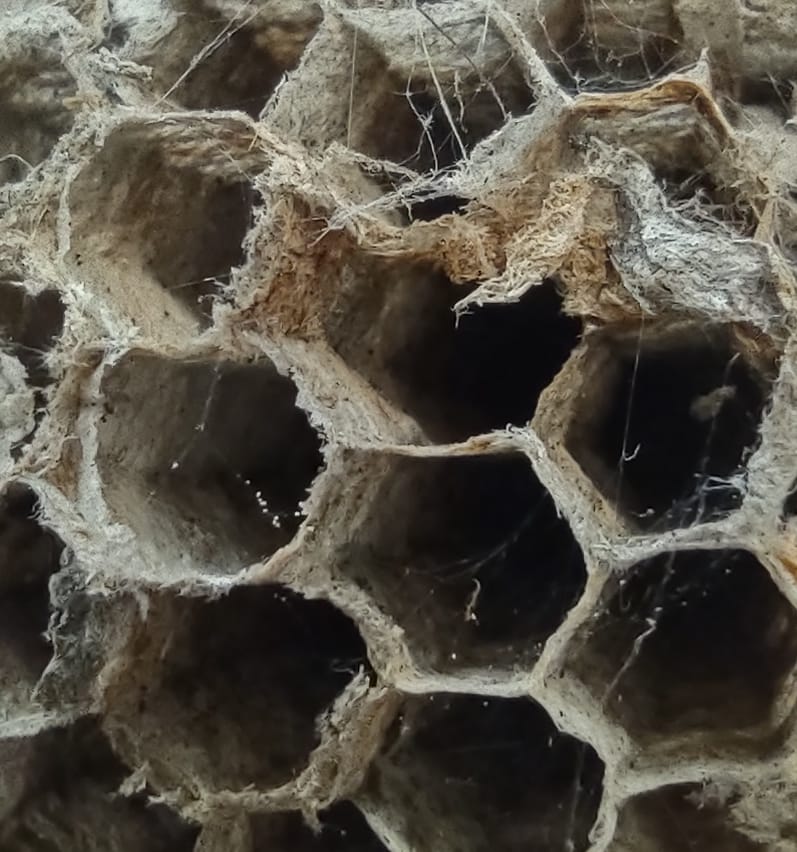
So, the math is everywhere, but there are a few disagreements on why that is, even as scientists, physicists, mathematicians, and autonomists continue to discover crazy appearances of math in nature. For this inaugural Math in Nature: wasps nests and beehives.
I discovered this little bugger low on the driver-side door well where the door hinges attach to the body of my truck, to wit:
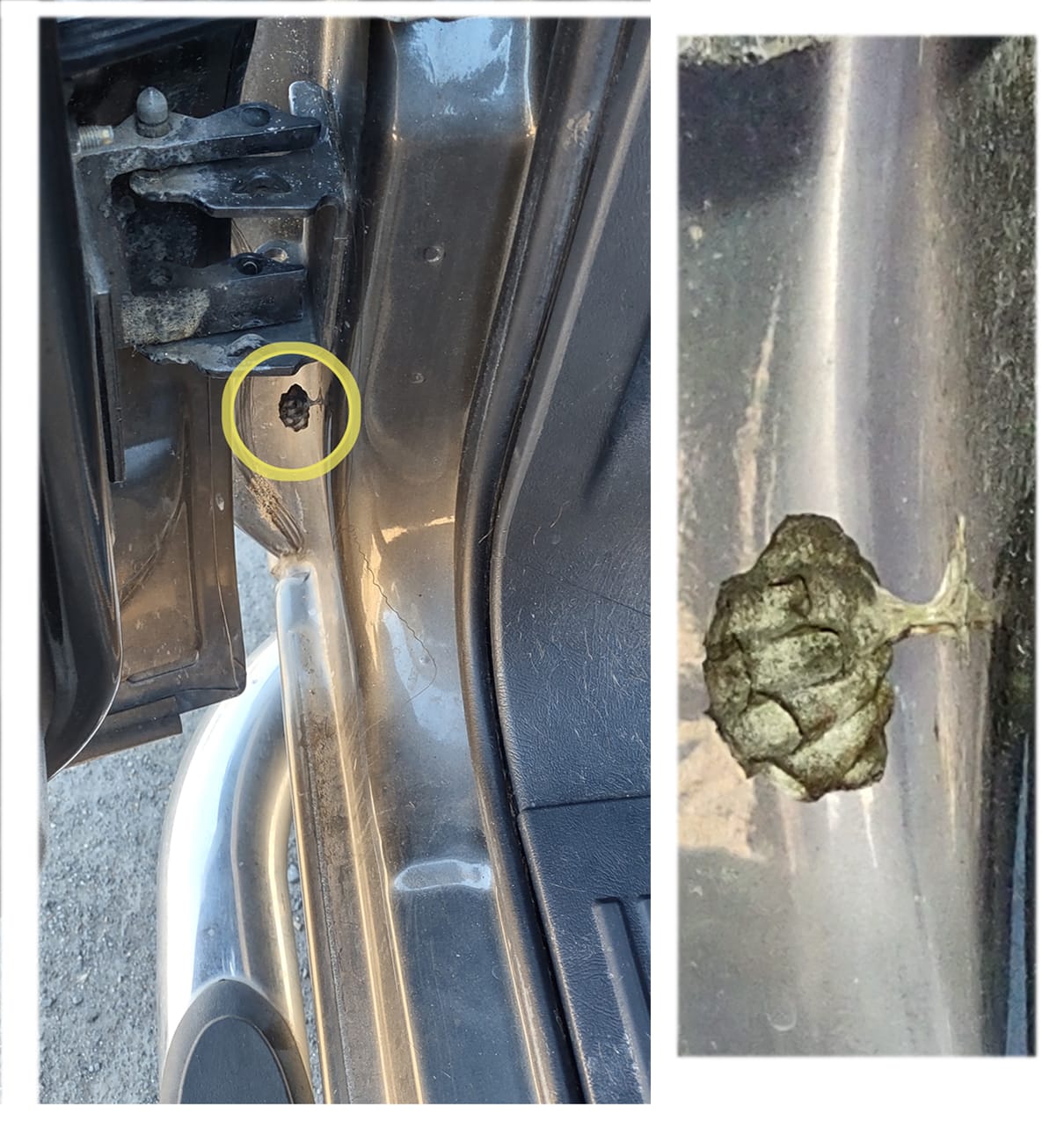
The truck had sat for almost a year in the driveway before I purchased it, which is most probably when the nest was built. It's a cute little dickens, its size the only difference between it and two other nests I have come across since:
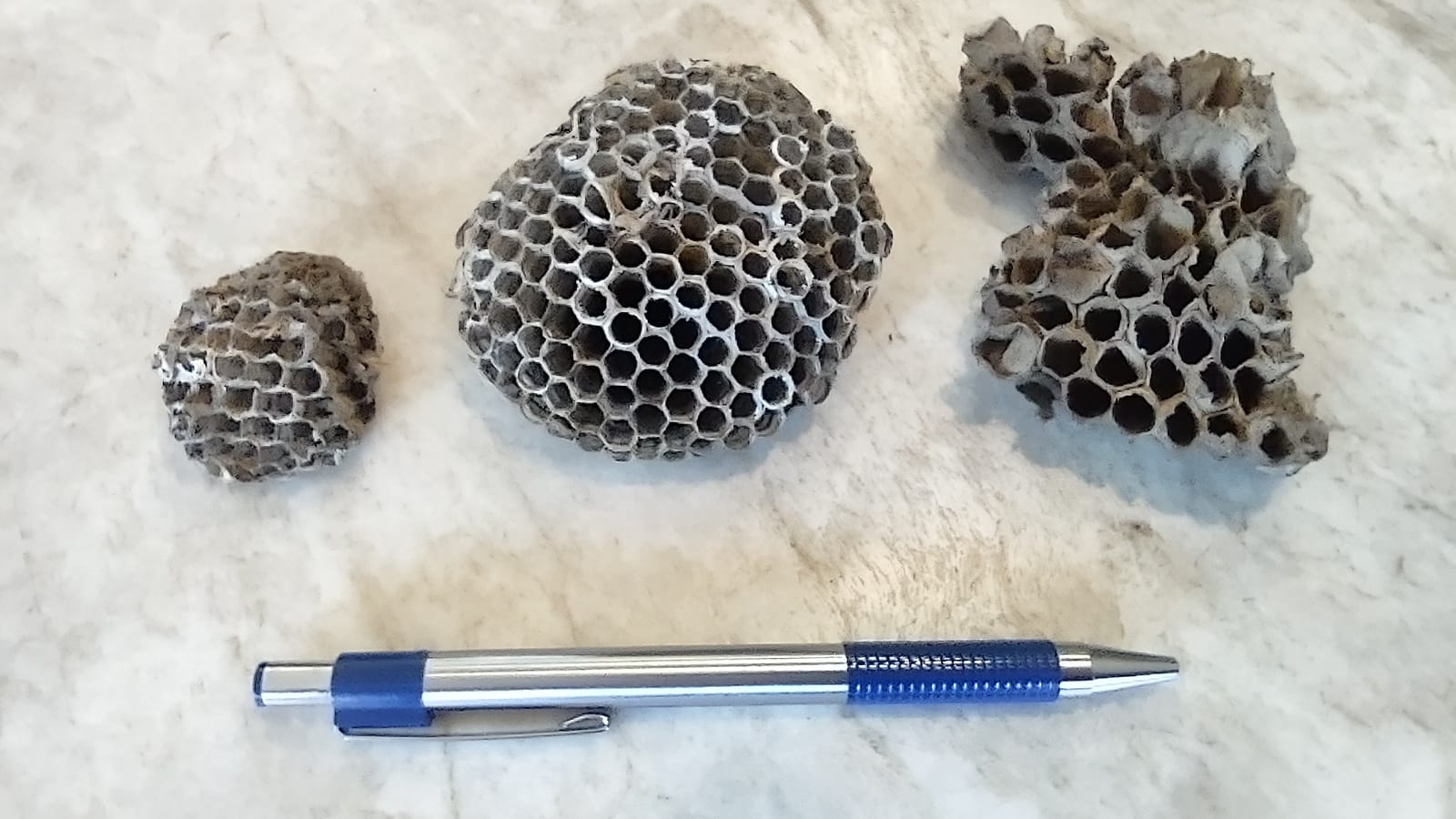
As if the beautiful symmetry wasn't impressive enough, these were constructed by creatures with brains smaller than a sesame seed, and, as noted in the link that follows, two distinct species created the same hexagon shaped homes, the only difference the material used (wasps use paper), even though each species' first appearance on earth is separated by almost 180 million years.
WIWW
Let's start with April, because I let some of the remembrances fall to the wayside for a bit. The majority of dates are based on web site archives along with my memory...which means things may be somewhat less than accurate.
April of 1977, I'm flown to NYC where I'm formally offered a gig with Journey, after something less than a year of doing road gigs for nada, although Bubba always found a hundred bucks as a 'tour expense' to give me.
May of 1979 Journey does three shows at the Aragon Ballroom in Chicago, or as many of us called it, the war zone.
May of 1980, the Babys' tour, includes a week in Detroit.
A footnote for context, during my time with the band we did hundreds of gigs a year over not quite a decade, so I can only include some dates when I do this, dates or gigs that were more memorable than others. I'll have some interesting ones to share at the end of June.
In Conclusion
I'm looking forward to sharing a few more long form essays in upcoming issues and some surprises. I do appreciate the time you spend here and never take your support for granted. All I ask in return is that you tell your friends about Story and Pictures, and information about my other work can always be checked out at michaelwharkins.com
Be safe, be well, and have a happy (sweltering) summer.
MWH